



Greek Craftsmanship
Digital Exhibition
Activities & Events
Crete

Crete boasts a rich tradition of craftsmanship, with a continuous presence from antiquity to the present day. Its geographical location, natural environment, agro-pastoral economy, and long historical trajectory have contributed to the development of a wide range of artisanal crafts. These crafts served the practical needs of daily life while simultaneously expressing aesthetic, symbolic, and devotional values, acting as vehicles for social memory and cultural identity.
The art of ceramics and pottery boasts a history spanning over 4,000 years, dating back to the Minoan period. Large storage jars, pitchers, and cooking vessels met essential needs for storage and transport, while many vessels also served ritual or religious purposes. Centers such as Thrapsano and Margarites continue the pottery tradition to this day—alongside the crafting of silver *foukaria*, the ornate sheaths of the famous Cretan knives.
The craft of instrument making developed in direct connection with traditional Cretan music, as the instruments were initially crafted by the musicians themselves using materials from the Cretan landscape. The arts of stone and wood craftsmanship were fundamental to Cretan architecture and sculpture; from Minoan pottery and architectural elements to stone reliefs and the decorative details of folk and ecclesiastical buildings, stonework and stone carving are characterized by their enduring nature.
Instrument making developed in close connection with traditional Cretan music, as the instruments were initially crafted by the musicians themselves using materials from the Cretan landscape. This practice lent the instruments a distinctive timbre and authenticity. The Cretan lyra, the laouto, the chabioli, and the askomantoura are key instruments defining the island’s musical identity.
Religious tradition holds a prominent place in Cretan culture, finding expression through various art forms. Cretan iconography—particularly through the Cretan School—established the island as a major center of post-Byzantine art, blending Byzantine spirituality with artistic excellence and exerting a broad influence across the Orthodox world. At the same time, the craft of beeswax modeling has long served devotional and ritual needs, constituting an integral part of ecclesiastical life and the religious practices of local communities.
For centuries, weaving and embroidery were fundamental domestic activities—primarily performed by women—and were directly linked to the institution of the dowry and the social role of women. Woven kilims, heavy woolen blankets, and embroideries featuring vibrant colors and geometric or floral motifs reflected the aesthetics and collective memory of the communities. Metalworking, and knife-making in particular, also acquired a strong symbolic character; the Cretan knife served not merely as a tool or weapon, but as a symbol of freedom, honor, and manhood.
Leatherworking and shoemaking were purely utilitarian crafts; a characteristic product was the Cretan *stivania* (traditional high leather boots), which served the needs of agricultural and pastoral life. At the same time, basketry and straw-weaving utilized plant-based raw materials to create practical items—such as baskets and straw mats—that were essential to daily life. Finally, soap-making, which was closely linked to olive cultivation, evolved from a simple household practice into a significant artisanal economic activity, particularly in urban centers and ports.
Although many of these crafts are not practiced today within organized artisanal enterprises, they survive through individual craftspeople, small workshops, cultural associations, and museum institutions. In many instances, they are experiencing a revival through the combination of traditional techniques with modern, entrepreneurial, and ecological approaches. Overall, Cretan handicrafts are not merely techniques for producing utilitarian objects or works of art, but expressions of collective memory and cultural identity that continue to creatively link the island’s past with its present.
Iconography
Iconography in Crete represents one of the most significant expressions of Byzantine and post-Byzantine art, possessing deep roots and a distinctive artistic identity. Its evolution is directly linked to the island’s historical trajectory and its position as a crossroads of cultures in the Eastern Mediterranean.
The tradition of icon painting in Crete dates back to the Byzantine era but flourished significantly during the period of Venetian rule (13th–17th centuries), when the so-called Cretan School of icon painting emerged. Cretan icon painting combines the Late Byzantine (Palaiologan) tradition with influences from Italian Renaissance painting. The result is a balance between Byzantine spirituality and more earthly or secular elements. The figures adhere to established iconographic conventions—such as body postures, attire, and gestures—while emphasis is placed on the gaze as a “window” into the saint’s spiritual state.
Crete was emerging as a major center for the production of icons, which were exported throughout the Orthodox world. Portable icons enjoyed particular popularity; thanks to their functionality and relatively affordable cost, they occupied a central place in production. Consequently, they gradually began to transcend their purely devotional role and established themselves as autonomous works of art possessing both collectible and economic value.
Chandakas (Heraklion), Chania, Rethymno, and significant monasteries on the island were major centers of icon painting. Prominent icon painters emerged from the Cretan School, the most renowned being Angelos Akotantos, Michael Damaskinos, and Domenikos Theotokopoulos (El Greco).
Today, the art of iconography continues to flourish in Crete. The Church of Crete—through the Holy Archdiocese of Crete and its eight Holy Metropolises—as well as individual parishes, plays a significant role in preserving and transmitting knowledge of the Byzantine style and the tradition of the Cretan School by operating iconography schools and organizing workshops and seminars. At the same time, contemporary iconographers with private studios are active across the island, undertaking the painting of church interiors, creating portable icons, and organizing educational seminars.
Sources – Bibliography
• Wikipedia – Cretan School
• SearchCulture.gr – The Cretan School of Iconography
• KritiTraveller – The Birth of the Cretan School
• Hellenica World – Cretan School
• CorfuHistory – From the Cretan to the Heptanese School
• Pemptousia – The Cretan School and Hesychasm
Silversmithing, Goldsmithing, and Jewelry Making
Goldsmithing and jewelry making in Crete represent one of the island’s oldest and most refined forms of artistic creation. The history of this craft dates back to the Minoan period (3rd–2nd millennium BC), when Cretan artisans produced gold jewelry of exceptional technical mastery, as evidenced by finds from Malia and Knossos. The Minoans developed advanced techniques—such as granulation and filigree—and adorned their works with figurative motifs inspired by nature and religion.
During the Classical and Hellenistic periods, greater emphasis was placed on symmetry and simplicity, whereas in the Byzantine era, the arts of gold- and silversmithing and jewelry-making took on a pronounced religious character. Crosses, amulets, and ecclesiastical vessels—primarily made of silver—became intertwined with faith and daily life. During the periods of Venetian and Ottoman rule, Western influences enriched the range of motifs and techniques, while jewelry became an integral part of local attire and social customs, particularly in the context of weddings and festivals.
Key characteristics of Cretan silversmithing and goldsmithing include the harmonious coexistence of simplicity and luxury, as well as a strong symbolic character. Artisans have long employed—and continue to use—techniques such as forging, casting, repoussé, granulation, and filigree. The silver *foukaria*—the sheaths of the renowned Cretan silver-mounted knives—are of great aesthetic value. These objects embody the exceptional craftsmanship of Cretan silversmiths and their distinctive artistic expression, which manifests itself vividly and expressively across the cylindrical surfaces of the silver knife sheaths.
Heraklion, Chania, and Rethymno—as well as eastern Crete—have long been, and remain, significant centers for the development of the arts of silversmithing, goldsmithing, and jewelry making. Today, seminars on jewelry making and precious metalwork are organized across the island, either by individual artisans or as part of cultural and educational initiatives led by municipalities, associations, and folk art organizations. At the same time, contemporary workshops—drawing inspiration primarily from Minoan-era designs—combine traditional techniques with modern aesthetic approaches, keeping alive an art form that serves as a vital bearer of the island’s history, identity, and cultural continuity.
Sources:
• Traditional Cretan jewelry
• Cretan knife: characteristics and traditions
Leathercraft – Shoemaking
Leatherworking and shoemaking in Crete constitute a fundamental and enduring branch of the island’s traditional folk art, closely linked to livestock farming, rural life, and the need to traverse rugged terrain. Leather processing was employed from very early times for the manufacture of clothing, footwear, and work equipment.
The history of this craft dates back to the Minoan period, when leather was utilized for practical purposes. Organized professional workshops emerged during the Byzantine and Venetian eras, while the art of shoemaking flourished particularly in the villages during the period of Ottoman rule, with “tsangarides” (shoemakers) serving as key artisans within local communities. Indeed, in urban centers such as Chandakas (Heraklion), Chania, and Rethymno, organized guilds of leatherworkers, tanners, and shoemakers operated in accordance with the Ottoman *esnaf* system.
Key characteristics of Cretan leather craftsmanship include the use of natural leather—primarily from goats and sheep—an emphasis on durability and functionality, and a minimalist aesthetic. An iconic product is the *stivani* (handmade Cretan boot), a staple of men’s attire that is custom-made to the wearer’s measurements. The sole is traditionally hand-stitched using waxed thread, ensuring durability and water resistance.
The techniques involve the physical processing of the leather (cleaning, softening, dyeing), as well as manual cutting, stitching, and shaping on a last. Key tools include the awl, hammer, chisels, molds, and lasts, while modern workshops combine these with limited mechanization.
Areas such as Heraklion, Rethymno, and Chania—as well as villages with a strong tradition of livestock farming, such as Anogeia, Kritsa, and Tympaki—have long been, and remain, important centers of leather craftsmanship. Today, a small but significant number of artisans continue this tradition, primarily through family-run workshops. At the same time, cultural associations, municipalities, and folk art organizations arrange events, presentations, and hands-on workshops, contributing to the preservation and promotion of the craft.
Sources
• Elliniko Panorama
• Municipality of Anogeia, Stivania
Basketry and Straw Weaving
Basketry and mat-weaving are among the oldest and most widespread forms of traditional craftsmanship in Crete, having developed to meet the needs of the island’s agricultural, pastoral, and domestic life. These crafts rely on a deep understanding of the natural environment, the use of local plant materials, and manual dexterity; they primarily serve practical daily needs, such as the transport and storage of goods (basketry) and the lining of interiors and roofs with reed screens and woven mats (mat-weaving).
The origins of basket and mat weaving in Crete date back to the Minoan era, as there is evidence of the use of woven plant-fiber containers for transporting and storing goods. During the Byzantine period and Venetian rule, the craft continued to be practiced as a domestic or communal activity; subsequently, throughout the period of Ottoman rule and up to the mid-20th century, basket weaving served as a supplementary activity within the agricultural economy of Crete’s mountainous and lowland regions.
The main characteristics of Cretan basketry and straw-weaving are their strictly utilitarian nature, the absence of decorative elements, sturdy construction, and adaptability to the user’s needs. Key raw materials included chaste tree (lygaria), reed, mastic tree (schinos), rushes, straw, and, in some cases, palm fronds. The choice of material depended on both the region’s geographical conditions and the object’s intended function. The tools used were few and simple—typically knives and awls.
A related field to basketry was *kanistroplektiki*—specifically the making of *kanistra* (a type of basket)—a highly demanding craft that survives to this day in only a few areas; notable examples include the village of Nyvritos near Zaros, Gonies Maleviziou, and the village of Myxorouma in Rethymno. In general, although the profession has all but vanished, the art of basket and straw weaving endures through presentations, demonstrations, and educational activities organized by folklore museums, cultural associations, and experiential workshops.
Sources:
• Καλαθοπλεκτική και ψαθοπλεκτική: τέχνες με παρελθόν
• Καλαθοπλεκτική – Από τις πιο παλιές τέχνες στην Κρήτη
• Μιξόρρουμα: Το χωριό με τους περίφημους καλαθοπλέκτες
• Καλαθοπλεκτική
Komboloi making
The art of the *komboloi* (worry beads) in Crete is a distinctive form of folk craftsmanship, primarily associated with modern Greek culture and men’s social life. The *komboloi* serves as an object of relaxation and personal expression, closely linked to everyday life, the *kafenio* (traditional coffee house), and social gatherings.
Its history traces back to Eastern Mediterranean prayer aids, such as the *komboskini* and the *misbaha*. In Greece—and specifically in Crete—it became established during the period of Ottoman rule, gradually shedding its religious associations to assume a purely secular character. Throughout the 19th and 20th centuries, the *komboloi* evolved into a symbol of masculinity, patience, and social attitude.
Cretan *komboloi* (worry beads) are characterized by their simple form, dark hues, and an odd number of beads (typically 19, 23, or 33—though traditional examples may feature 51 or 101), as well as an emphasis on sound and tactile sensation during use. They are crafted from natural, traditional materials such as olive wood, ebony, bone, and horn, as well as precious materials like amber, coral, and semi-precious stones, or even modern synthetic resins.
Cretan *komboloi* (worry beads) are characterized by their simple form, dark hues, and an odd number of beads (typically 19, 23, or 33—though traditional examples may feature 51 or 101), as well as an emphasis on sound and tactile sensation during use. They are crafted from natural, traditional materials such as olive wood, ebony, bone, and horn, as well as precious materials like amber, coral, and semi-precious stones, or even modern synthetic resins.
Today, the art of *komboloi* (worry bead) making in Crete is preserved primarily through small workshops and artisans in areas such as Rethymno, Heraklion, and Chania, while various entities—such as the “Crete and Crafts” program—contribute to documenting, promoting, and showcasing the craft through exhibitions, presentations, and educational activities. The art of *komboloi* making remains a living element of Crete’s intangible cultural heritage.
Sources:
• Η ιστορία του κομπολογιού
• Κομπολογάδικο Ρεθύμνου
• Η τέχνη του κομπολογιού
Ceramics – Pottery
The arts of ceramics and pottery have maintained a continuous historical presence in Crete for over 4,000 years, playing a significant role in shaping and organizing daily life. The art of working with clay was closely linked to the fundamental needs of human existence—such as the storage and transport of goods and cooking—as well as to devotional and ritual practices.
Pottery-making in Crete flourished particularly during the Minoan period (3000–1100 BC), a time when vessels of high technical and aesthetic quality—such as *pithoi* (large storage jars), *rhyta* (ritual vessels), amphorae, and cups—were produced. Minoan ceramics are distinguished by the fineness of the clay and their pictorial decoration. Production continued into Byzantine times with simpler forms, whereas during the Venetian and Ottoman periods, pottery adapted primarily to agricultural needs, and the elaborate decoration of the ceramic wares was significantly reduced. During this period, potters traveled across the island in well-organized groups, carrying all the necessary equipment with them.
Major centers of pottery in Crete—both historically and today—include Thrapsano in Heraklion, known for *pithos* (large storage jar) making and organized seasonal production campaigns (*vendemaria*); Margarites in Rethymno, with a tradition of smaller and decorative vessels; Nochia in Chania, renowned for the creation of water jars (*stamnes*); and Kentri in Lasithi.
Today, family workshops and professional ceramicists continue to practice the art of ceramics, enriching traditional techniques with modern forms of decoration and design. Modern ceramic studios and art spaces operate in urban centers such as Heraklion and Chania, offering courses in ceramics and pottery, often in the form of short-term workshops. At the same time, folklore museums and local organizations arrange exhibitions and events, helping to preserve and showcase an art form that serves as a living vehicle for memory, culture, and creative continuity in Crete.
Sources:
• Η αγγειοπλαστική τέχνη στην Κρήτη
• Παραδοσιακή Κρητική Κεραμική
• Η Κρητική κεραμική σήμερα
Wax modeling
Candle-making in Crete is a traditional folk art with a strong religious character, inextricably linked to the Orthodox faith and beekeeping. While the use of wax dates back to antiquity, the systematic development of candle-making took shape primarily during the Christian era, when wax became established as a fundamental element of worship. The craft flourished throughout Crete—particularly in rural areas with significant beekeeping activity and near major monasteries—where wax was used for lighting, meeting daily needs, and religious ceremonies. The art was passed down empirically from generation to generation, without an organized guild structure.
In the present day, the art of candle-making is not widely practiced. However, small-scale workshops remain active, catering not only to religious needs but also to the demands of the tourism market.
Stonecraft – Stonemasonry
Stone craftsmanship and stone carving in Crete have maintained an unbroken historical presence from the Neolithic period to the present day. The abundance of diverse rock types—such as limestone, ophite, steatite, and marble—played a decisive role in the development of this art form, which was linked to both practical needs and artistic expression.
During the Minoan period, stone craftsmanship flourished remarkably. Minoan stonemasons produced stone vessels, lamps, sealstones, and architectural elements with exceptional precision, developing advanced techniques for working even hard stone. In Byzantine and Venetian times, stonemasonry was primarily associated with architecture, ecclesiastical sculpture, and building ornamentation, featuring distinctive reliefs, doorways, and capitals.
Knossos, Phaistos, and Malia were significant centers of artistic development, as were areas of Lasithi—such as the village of Voulismeni—where remarkable folk stone carvings have been preserved.
In modern times, stonework and stone carving are practiced primarily by individual artisans and small workshops on a limited scale. At the same time, museums and cultural organizations undertake initiatives—such as exhibitions, presentations, and educational programs—that contribute significantly to preserving and showcasing an art form that constitutes a fundamental element of Crete’s cultural identity.
Source:
• Ο λίθος, τα μέταλλα και τα ορυκτά στην ιστορία της ανθρωπότητας
Metalworking & Knife Making
Metalworking, and knife-making in particular, are traditional crafts in Crete with deep historical roots, inextricably linked to daily life and agricultural and pastoral activities, as well as to the symbolism of honor and identity.
Metalworking emerged as early as the Minoan period with the production of tools, weapons, and jewelry from copper and bronze. During the Classical era, the need to defend the largest Greek island drove further advancements in metallurgy and, consequently, in weapon manufacturing. Metal craftsmanship continued to evolve throughout the Byzantine period; however, following the Ottoman conquest of Crete—and particularly from the 18th century onwards—knife-making assumed a distinctive place in Cretan society. In the 19th century, Cretan knives became closely linked to the repeated uprisings and the Cretans’ struggle for liberation.
Thus, the Cretan knife serves not only as a tool or a weapon but also as a symbol of resistance and freedom. It was often decorated with engraved *mantinades* (traditional rhyming couplets) and floral or geometric motifs. The typical Cretan knife has a shape reminiscent of an arrow; its sturdy steel blade features a single cutting edge, while the opposite side—the “spine”—is flat, reinforced at the base, and tapers gradually toward the tip, culminating in an extremely sharp point.
The handle of the Cretan knife is known as the “manika” and comes in three main types. In one, the end of the handle resembles a bird’s beak; in another, it features the style found on naval yataghans during the 18th and 19th centuries; and in the third—the classic Cretan type—the end forms a “V” shape. This distinctive handle is invariably made from animal material, such as horn or bone, while the most luxurious Cretan knives feature handles made of ivory.
The regions of Chania and Heraklion, along with certain inland areas, have long been—and remain—important centers for metalworking and knife-making. Today, the craft is practiced on a limited scale by individual artisans and family-run workshops. The Cretan knife retains its dual role as both a functional tool and a symbol of cultural identity, making it highly popular among locals and visitors alike.
Sources:
• Μεταλλοτεχνία
• Το κρητικό μαχαίρι: ιστορία και χαρακτηριστικά
• Μαχαιράς
• Κρητικό μαχαίρι: Ιστορία, χαρακτηριστικά και παραδόσεις
• Κρητικό Μαχαίρι, χαρακτηριστικά και παραδόσεις
Woodworking – Woodcarving
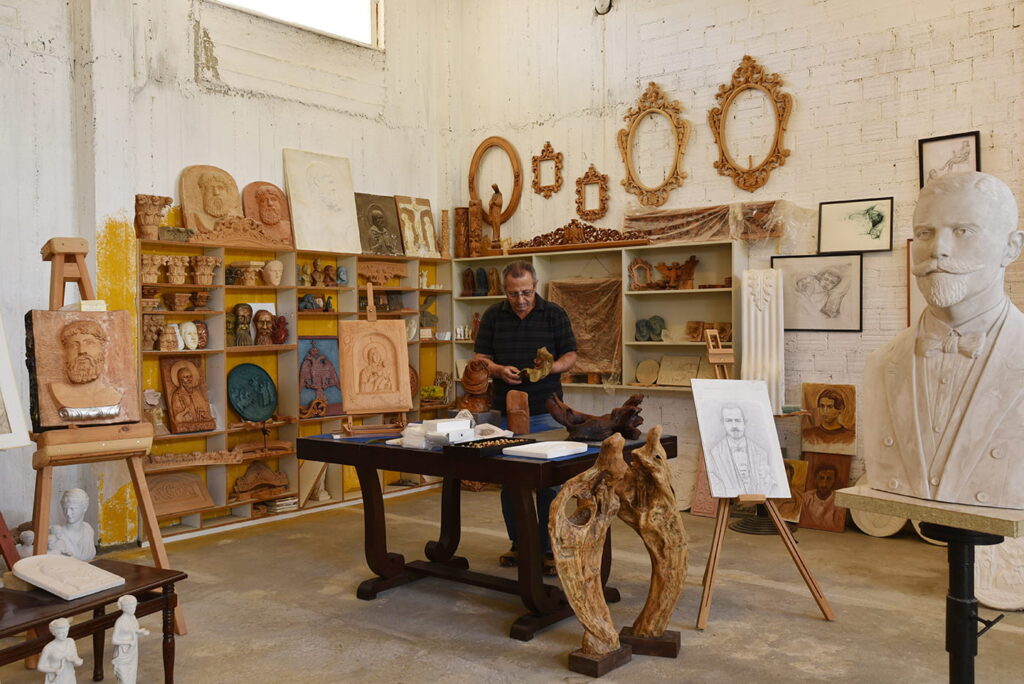
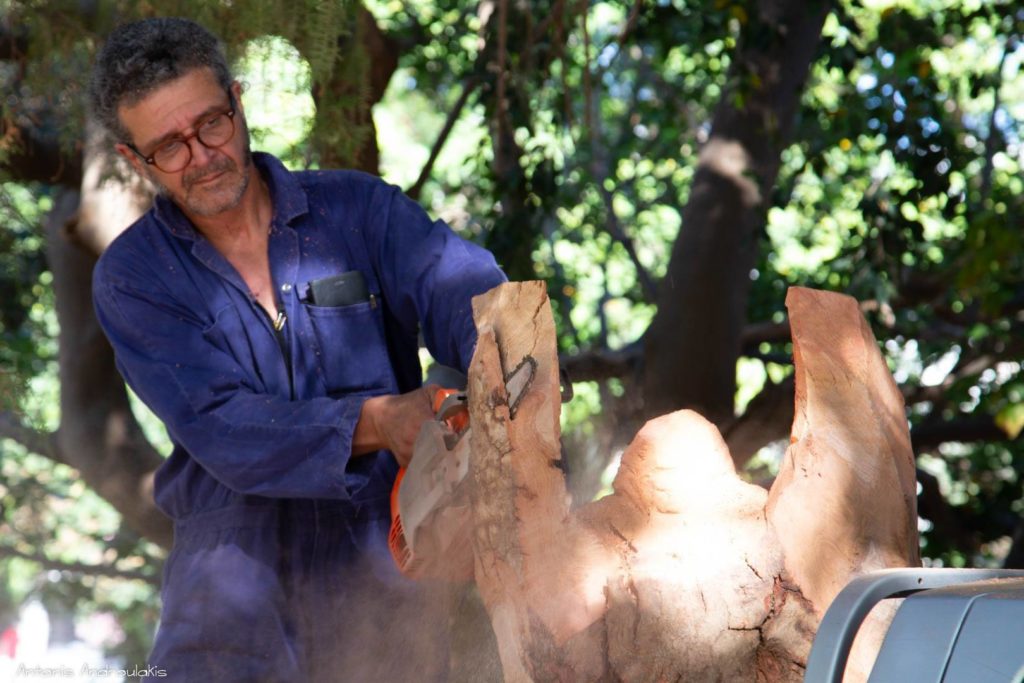
Woodworking and woodcarving in Crete are traditional crafts with a long historical continuity, inextricably linked—through direct functional relationships—to daily life, religious worship, and architecture. The use of wood for crafting tools, utensils, functional objects, and toys dates back to prehistoric times, while decorative woodcarving flourished particularly from the Byzantine era onwards.
During the Byzantine and post-Byzantine periods, woodcarving assumed a prominent place in ecclesiastical art through the creation of iconostasis screens, episcopal thrones, ambos, and doors adorned with religious symbols as well as floral and geometric motifs. In more recent times, the craft extended to objects for domestic and everyday use—such as furniture, chests, doors, and ceilings—serving both practical and aesthetic needs.
A special place in Cretan woodwork is held by the *katsouna*—a traditional type of staff used primarily by livestock herders to control animals, for support while walking, or even for decorative purposes. Traditionally, it was crafted from *ampelitsia* wood, a species that is now protected. However, to keep the craft alive, modern *katsounes* are now made from various other types of wood—such as kermes oak, storax, lentisk, pomegranate, fig, white mulberry, black mulberry, and plum—each offering distinct advantages.
The crafting of wooden musical instruments—such as the Cretan lyra and the lute—is a related form of woodworking; it requires a high level of technical knowledge regarding the wood itself, its grain, its durability, and its tonal qualities. It should be noted that instrument making constitutes a distinct art form.
Areas of Lasithi (particularly the Plateau) and Chania, as well as monastic workshops throughout Crete, were significant centers for the development of woodworking and woodcarving. Today, these crafts are practiced on a limited scale by individual artisans and small workshops, while the activities of cultural associations, folklore museums, and ecclesiastical bodies contribute substantially to their preservation and promotion as elements of Crete’s cultural heritage.
Sources:
• Ξυλογλυπτική: Ενώνοντας παρελθόν και μέλλον
• Wikipedia – Ξυλογλυπτική
• Wikipedia – Κρητική μπαστούνα
Musical Instrument Making
Musical instrument making in Crete is a traditional craft with deep historical roots, inextricably linked to the island’s musical tradition and cultural identity. Developing in tandem with traditional music, the craft was initially practiced by the musicians themselves, who built the instruments they played. They utilized materials from the Cretan landscape, a practice that endowed the instruments with their distinctive timbre.
The primary musical instruments crafted include the Cretan lyra, the laouto (lute), the mandolin, and the violin, alongside accompanying instruments such as the boulgari. The Cretan lyra holds a central role; historically, it was made from mulberry, maple, or walnut wood. Its bow was fashioned from medlar wood and horsehair, and often featured small bells known as *gerakokoudouna* (hawk bells). The form of the lyra as we know it today became established after 1940. Meanwhile, other traditional instruments—such as the *chabioli*—were crafted from reed, whereas the *askomantoura* was made from a whole goatskin.
Characteristics of Cretan instrument making include handcrafted construction, precision of form, and a deep understanding of wood grain and acoustics. Today, the craft is practiced by experienced makers across the island. Prominent figures include Antonis Stefanakis, with a workshop in Zaros, as well as—in the Lasithi Prefecture—Sifis Apostolakis’s “Lato” workshop in Kritsa and Giorgis Papachatzakis’s workshop in Neapoli. At the same time, a new generation of makers, possessing deep knowledge of both instrument making and the Cretan musical tradition, is creatively evolving the craft, contributing to its preservation and contemporary renewal.
Sources:
• Η λύρα της Κρήτης και του Αιγαίου
• Μουσική παράδοση
• Wikipedia – Κρητική λύρα
Soap making
Soap making is one of Crete’s most distinctive traditional artisanal activities, inextricably linked to olive cultivation and the self-sufficiency of rural society. The use of olive oil-based cleansing agents dates back to antiquity, while during the Byzantine era, soap production continued primarily in household workshops and monasteries. The industry flourished particularly during the period of Venetian rule and later in the 19th century, when organized soap-making workshops and small-scale factories were established, mainly in urban centers and port cities.
Soap making had a significant impact on the daily life, society, and economy of Crete. Soap was an essential product for personal, textile, and household hygiene, while its production boosted local incomes and commercial activity. In cities such as Chania, Heraklion, and Rethymno, soap factories were directly linked to urban development and trade, constituting a major economic sector.
Key characteristics of Cretan soap-making include the use of pure olive oil, a simple composition, and—in its traditional form—the absence of chemical additives. The primary techniques involved the hot-process method in cauldrons and the cold-process method, utilizing olive oil, water, and alkaline substances (ash or caustic soda) as raw materials.
In modern times, soap-making in Crete is experiencing a revival through small workshops producing handmade, natural, and eco-friendly soaps that draw inspiration from traditional craftsmanship. Although the sector lacks large-scale institutional organization, it demonstrates significant growth potential when operating through collaborations and cultural promotion initiatives. This hybrid model—combining tradition with modern micro-entrepreneurship—constitutes the key advantage of Cretan soap-making today.
Sources:
• Σαπωνοποιία στην Κρήτη
• Σαπωνοποιός
• Τα παλιά σαπωνοποιεία των Χανίων
• Οι Σαπωνοποιίες του Ρεθύμνου
• Αρχοντικά, κρητικά σαπούνια
• Η Σαπωνοποιία στα χρόνια της Κρητικής πολιτείας
• Κυρίαρχος ο ρόλος της σαπωνοποιίας στην οικονομία και την κοινωνία του Ρεθύμνου
Weaving – Embroidery
Weaving and embroidery constitute a fundamental pillar of Crete’s cultural identity. They were directly linked to daily life, the household economy, clothing, and social roles.
The origins of Cretan weaving can be traced back to the Minoan period, as evidenced by archaeological finds—such as loom weights and spindle whorls—that demonstrate organized textile production. During the Byzantine era and the period of Venetian rule, weaving and embroidery evolved, featuring richer ornamentation and becoming closely linked to the institution of the dowry and a family’s social standing. These crafts were practiced primarily by women, who passed down their knowledge experientially from generation to generation; until the mid-20th century, almost every Cretan household—particularly in mountain villages—possessed a loom.
Cretan weaving is characterized by vibrant colors and rich ornamentation featuring geometric shapes and imagery inspired by nature and human activities. These elaborately patterned Cretan textiles are crafted from wool, linen, cotton, and silk. Common products of this craft include wool kilims, heavy woven blankets (*patanies*), colorful satchels (*vourgies*), cotton or linen bedsheets and towels, as well as silk garments.
Cretan embroideries are renowned for their colorful imagery—featuring themes inspired by nature and daily life, as well as motifs drawn from the island’s Minoan and Byzantine traditions. Often, woven and embroidered pieces are complemented by intricate lace work featuring elaborate designs and harmonious compositions, further enhancing their decorative and artistic appeal. Anogeia, Zoniana (in the Mylopotamos region), Zaros, Merambello, Asterousia, and areas of Lasithi have long been—and remain—important centers of this craft.
Nowadays, weaving and embroidery in Crete are no longer practiced as large-scale domestic activities; nevertheless, they remain alive through individual professional weavers, small workshops, and the initiatives of cultural associations and folklore museums. Traditional techniques are primarily taught in seminars and experiential workshops, while contemporary creators are revisiting these crafts by combining traditional expertise with modern aesthetics and eco-friendly practices.
Sources:
• The art of weaving in Crete
• The weavers of Crete
Engraving
Printmaking in Crete is an art form with deep roots, spanning from prehistory to contemporary artistic creation. Its origins can be traced back to the Minoan period with the emergence of seal carving—a highly developed form of miniature engraving. Minoans carved imagery onto stone seals and signet rings made of semi-precious stones, which were used for administrative, commercial, and religious purposes. These works are distinguished by the delicacy of the engraving, the figurative motifs, and the condensation of complex scenes onto a very small surface area.
In historical and Byzantine times, the practice of incising continued on inscriptions and on objects made of wood, stone, and metal, whereas printmaking—in the strict sense of producing impressions—developed primarily in the modern era.
Knossos, Phaistos, and Malia were key centers for the development of printmaking in Crete during antiquity, whereas today, activity is concentrated primarily in urban centers. At the same time, various cultural organizations and institutions host exhibitions of contemporary printmaking and organize educational programs. Thus, printmaking in Crete continues to serve as a living link between the past and contemporary artistic expression.
Sources:
• The micro-sculpture of Cretan-Mycenaean seals
• On Messenian seal-engraving
• Minoan Civilization: seal-engraving, architectural designs
The evolution of craftsmanship in Crete is inextricably linked to the island’s historical trajectory and reflects the social, economic, and cultural changes of each era. As early as prehistoric times, Crete’s early societies developed fundamental techniques for working with natural materials such as stone, clay, wood, and plant fibers. Stone-working and masonry were employed to create tools and architectural elements, while ceramics and pottery-making became essential crafts for food storage and preparation. Concurrently, weaving and basketry developed, meeting basic needs for clothing and the transport of goods.
During the Minoan era, craftsmanship experienced a remarkable flourishing and specialization. Pottery reached an exceptionally high level of technical and aesthetic quality, producing elaborate vessels intended for both everyday and ritual use. Goldsmithing and jewelry-making yielded unique works of great artistry, while the art of engraving found expression in seal-carving. Concurrently, textile production became organized and systematic, utilizing wool, flax, and dyes derived from the natural environment. This period also saw the emergence of the earliest forms of musical instrument making, primarily involving wind and string instruments.
During Byzantine times, religion decisively influenced the form and function of the arts. Iconography developed gradually, as did woodcarving, which became linked to ecclesiastical architecture and church decoration. Wax modeling—rooted in beekeeping—served devotional needs, while weaving and embroidery were enriched with new motifs and decorative patterns reflecting the Christian worldview. Ceramics and stone carving retained their utilitarian character, adapted to the needs of the communities.
During Byzantine times, religion decisively influenced the form and function of the arts. Iconography developed gradually, as did woodcarving, which became linked to ecclesiastical architecture and church decoration. Wax modeling—rooted in beekeeping—served devotional needs, while weaving and embroidery were enriched with new motifs and decorative patterns reflecting the Christian worldview. Ceramics and stone carving retained their utilitarian character, adapted to the needs of the communities.
The period of Venetian rule was pivotal for the professional organization of crafts. Organized workshops and guilds flourished, particularly in the fields of pottery, soap-making, knife-making, and gold- and silversmithing. Iconography experienced a golden age through the Cretan School, which produced internationally acclaimed artists and works of exceptional quality. Soap-making evolved into a significant artisanal activity, leveraging the island’s abundant olive oil, while woodworking and stone-carving contributed to the construction and decoration of buildings, public works, and churches.
During the period of Ottoman rule, artisanal crafts largely retained a folk and domestic character, serving as mechanisms for survival and cultural resistance. Metalworking—and knife-making in particular—took on strong symbolic significance, as the Cretan knife became an emblem of honor and freedom. The art of making *komboloi* (worry beads) evolved during the 19th and 20th centuries, becoming linked to social perceptions of masculinity. Weaving, embroidery, leatherworking, and shoemaking met the needs of agrarian and pastoral life, while basketry and straw-weaving provided essential utilitarian objects.
In the 20th century, gradual industrialization and the introduction of manufactured goods led to the decline of many traditional crafts. However, several survived through small family workshops. Pottery, musical instrument making, knife making, and icon painting continued to be practiced, while soap making and weaving gradually declined within the domestic sphere.
In the 21st century, there is a renewed interest in the artisanal crafts of Crete. Many of these are being redefined through contemporary artistic and entrepreneurial practices that combine traditional know-how with modern micro-entrepreneurship. Cultural associations, museums, educational workshops, and young creators play a significant role in this process, contributing substantially to the preservation and evolution of these crafts. In this way, Cretan artisanal crafts remain living expressions of cultural memory and gain clear potential for further development.
Photos